
Contributor
Why November Is the Right Time to Address Lawn Drainage
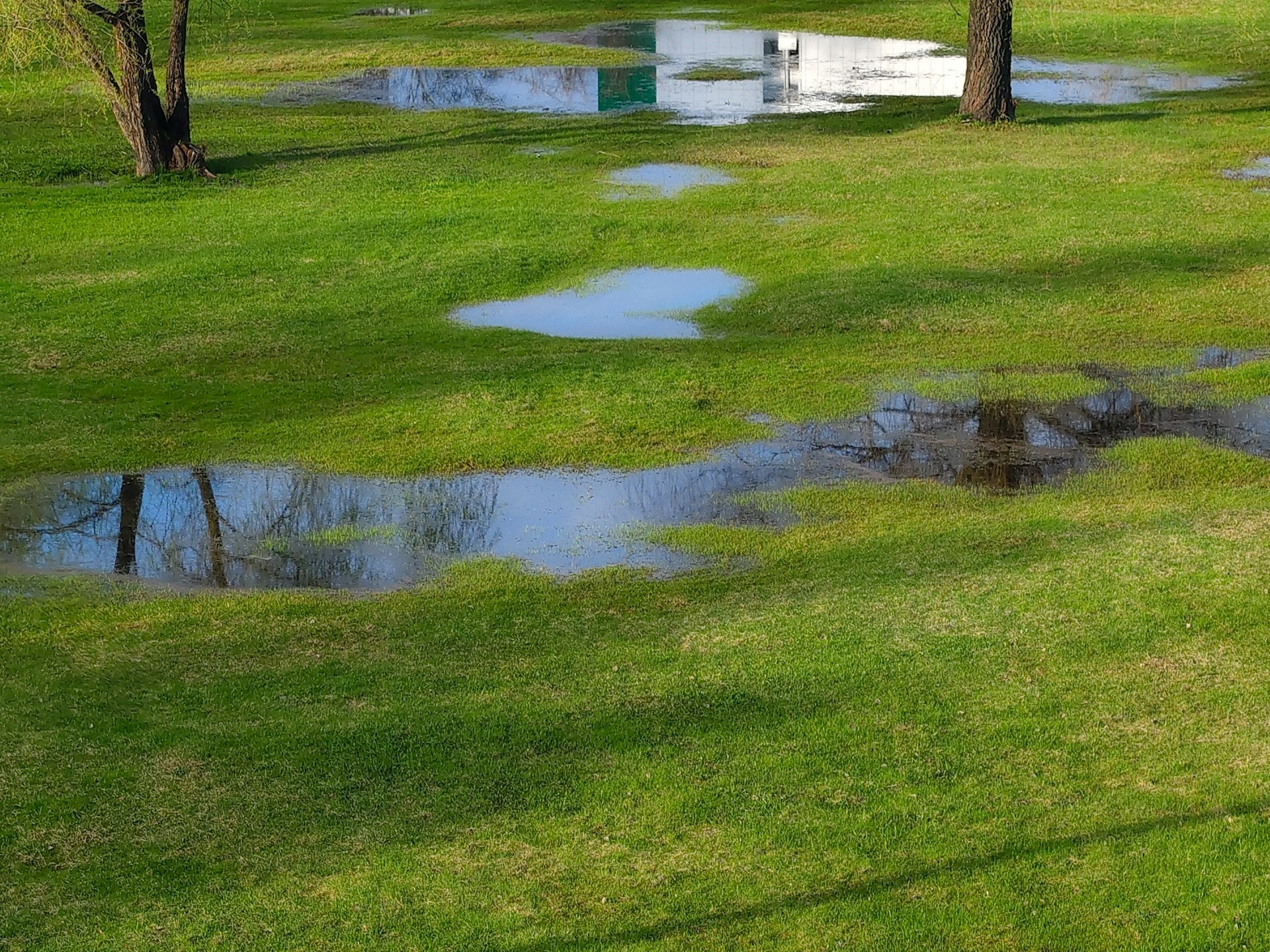
If your Central Indiana yard is holding water after a rain in November, that is not just an inconvenience. It is a warning. The same low spots and compacted soil that trap water in fall will freeze solid in December, expand, and heave. By spring, you may be dealing with dead turf, eroded beds, and saturated soil that takes weeks to dry out enough to work.
November is actually one of the best months to diagnose and begin correcting drainage problems. The ground is not yet frozen, contractors are available, and any grading or drain tile work done now will be in place before the worst of winter arrives.
The Most Common Causes of Poor Lawn Drainage in Central Indiana
Central Indiana sits on a mix of clay-heavy soils and glacial till that drains slowly by nature. Add decades of foot traffic, mowing, and construction compaction, and you have conditions that almost guarantee standing water after a significant rain.
The most common causes we see at Berger Hargis are: low spots that collect runoff from surrounding areas; compacted soil that has lost its pore structure and cannot absorb water at a useful rate; improper grading that slopes toward the house or toward a low corner of the yard; downspout discharge that empties too close to the foundation or into an area with no outlet; and clay hardpan just below the surface that acts as a barrier even when the top few inches of soil appear dry.
In many cases, more than one of these factors is at work at the same time, which is why a drainage problem that seems simple can be stubborn to fix without a proper site assessment.
What You Can Do Before the Ground Freezes
If you have a few weeks of workable ground left, there are meaningful steps you can take right now. Start by walking your yard after the next rain and marking every spot where water stands for more than an hour. Take photos. This gives you a clear map of the problem areas and a baseline to compare against after any work is done.
For minor low spots, top-dressing with a sand-compost blend and regrading by hand can redirect water toward a natural outlet. This works well for isolated depressions in otherwise well-draining turf. For more significant grading issues, a small amount of fill soil worked in before the ground freezes can make a measurable difference in spring.
Extend your downspouts. This is one of the highest-return, lowest-cost fixes available. A downspout that discharges within two feet of your foundation is directing thousands of gallons of water per year into the worst possible location. Extending it six to ten feet with a flexible elbow and a splash block, or burying a solid pipe to a pop-up emitter in the yard, can eliminate a significant portion of your drainage problem at minimal cost.
Pro Tip: Mark standing water spots right after a rain while they are still visible. A photo taken 30 minutes after a heavy rain tells you more about your drainage problem than any dry-weather inspection.
French Drains and Drain Tile: When You Need a Professional Solution
When the problem is persistent, widespread, or tied to a high water table, a French drain or subsurface drain tile system is the right answer. A French drain is a gravel-filled trench with a perforated pipe that intercepts groundwater and surface runoff and carries it to a lower outlet or a dry well. Installed correctly, it can transform a chronically wet yard into one that drains within hours of a rain.
Drain tile systems work similarly but are typically installed at greater depth to intercept water moving through the soil profile rather than just surface runoff. They are common in Central Indiana because of the clay soils and relatively flat topography that give water nowhere to go on its own.
Both systems require careful planning: the outlet must be lower than the inlet, the pipe must be sloped consistently, and the gravel envelope must be wrapped in filter fabric to prevent soil migration. A poorly installed French drain can actually make drainage worse by creating a new collection point with no outlet. This is work where professional installation pays for itself.
Aeration: A November Drainage Improvement You Can Do Yourself
Core aeration is one of the most effective and accessible drainage improvements available to homeowners. By pulling plugs of soil from the lawn, aeration breaks up surface compaction, creates channels for water to move downward, and improves the long-term structure of the soil.
November is late in the aeration season for Central Indiana, but if the ground is still workable and not yet frozen, a final aeration pass can still provide benefit. The channels created by aeration will remain open through winter and allow spring snowmelt to infiltrate rather than run off. Follow aeration with a light top-dressing of compost to further improve soil structure over the winter months.
For severely compacted soils, a single aeration pass may not be enough. Annual aeration over two to three seasons, combined with organic matter additions, is often needed to meaningfully improve drainage in heavily trafficked areas.
Planning Larger Drainage Work for Early Spring
If your drainage problem requires significant regrading, a French drain installation, or drain tile work, November is the right time to plan it even if the ground will not allow installation until March or April. Scheduling drainage work in fall means you are first in line when contractors become available in early spring, before the busy season begins.
At Berger Hargis, we assess drainage problems year-round and can walk your property in November to identify the causes and recommend the right solution before winter. That way, the work is planned, priced, and scheduled before the spring rush. Contact Berger Hargis to schedule a drainage assessment.
Sources
How Can We Help You?
Berger Hargis assesses drainage problems year-round. Contact Berger Hargis to schedule a drainage assessment.
Request an Estimate